
The neighbors began to arrive at six o’clock. First a couple arrived with flowers; then another with a bottle of wine; then one more with sandwiches. They came two by two, smiling, generous, following the path of the garden. They celebrated the orchids on the güititite, the distribution of the space and the initiative to invite them.
At some point, a man with a sharp gaze took my arm:
“You should write in Letra Libre about your new neighbors,” he suggested. Do it now, when you still have a good opinion of us.
I smiled a second late. Since then, while I was clearing the plates and pouring the wine, I began to mentally write these lines, aware that good opinion is not a renewable resource.
We had moved in three weeks ago. We dismantled a life and put it back together with uneven pieces: my partner and I, two teenagers, an elderly dog and three offended cats. Added to that was the remodeling: new floors, a hole in the kitchen and the illusion that raising the ceiling is a way to breathe better.
Moving is one of the dramatic reasons par excellence, perhaps because it makes us think that it is enough to move for the world to change. That night I understood that real changes don’t happen when we open a new chapter, but when we discover that we’ve arrived at a story that began before us.
Many of our new neighbors have lived in the neighborhood since the late seventies and have cultivated a meticulous memory of the place. During dinner they tried to inherit it to us with the patience of those who know how much accumulated time is worth.
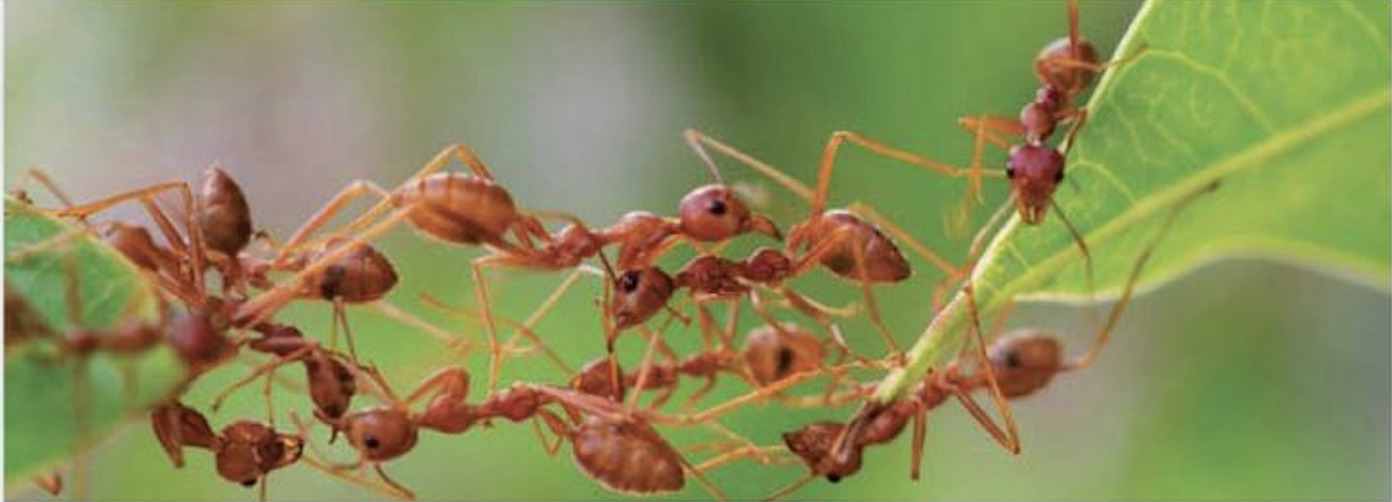
The conversation soon turned to the subject that united them like a secret faith: ants. Endless columns crisscrossed kitchens and bedrooms daily, claiming that geography as their own.
With the lightness of a newcomer, I told you that we had solved the problem almost unintentionally: we cut down a rose bush, threw the stems to a strategic point and diverted the ant path.
“And where did they divert it?” one of the neighbors asked.
Towards the back of the garden, I said, and I understood that I was about to upset the balance that silently sustains every community. In addition, imagining that we had solved in half an hour what they had suffered for half a century was, without a doubt, a form of arrogance.
Then came the inventory of defeats: predatory wasps, vinegary liquids, garlic barriers. Ants survived everything and learned to overcome obstacles with superior intelligence. To prevent the massacre from escalating, I threw myself into defending them: they are not individuals, I said, but a superorganism. An entity whose abilities arise from the sum of the parts.
I spoke of cooperation, of underground architecture, of exemplary efficiency. I spoke as if I were defending a political cause.
“And why don’t we bring you cake?” The same voice interrupted. To reward their talents.
I didn’t know if the comment was a joke or a genuine attempt at a truce with the bugs. Then a silent neighbor added the final fact: the anthill can exceed seven meters in depth and one hundred in diameter.
I did a quick calculation: there were about five million ants living under our feet. An inverted city, older, more populated and organized than ours.
I thought about the remodeling of the house, about the new floor, about the ascended roof. Would we have altered the terrain irreversibly? I imagined the house sliding into a void designed by underground engineers. The idea produced a mixture of fear and fascination in me.
The evening ended with laughter and promises of future meetings. Half an hour later I took the elderly dog for a walk. A few meters away, the neighbors continued the gathering under the lighting. I watched them and imagined the millions of ants that slept under their shoes.
As I walked away, I thought that a community is not only the group of those who share the sidewalk, but also the invisible fabric that sustains that coexistence. On the surface we live some neighbors; underneath, others – tiny and industrious – help us, without knowing it, to form community.
Perhaps coexistence means recognizing that every surface has its reverse. That each neighborhood corresponds to another hidden one, organized according to its own laws, and that inhabiting that small corner of the world does not consist in dominating it, but in learning to inhabit it with humility, even when we do not fully understand it.