
A few days ago, Glenda Umaña and Hugo Famanía interviewed me to hear my views on the environmental situation in Crucitas, as part of a report to be broadcast by a Panamanian media outlet. We sat by the lake in La Paz Park. A ray of sunlight illuminated my face.
“It works well for the camera,” they said.
I felt it directly in my eyes. The discomfort seemed fittingly close to the subject we were about to discuss.
They went straight to the point:
“What conclusions emerged from the dialogue tables on the future of Crucitas that you coordinated with the National Academy of Sciences a year and a half ago?”
I tried to answer honestly: it is a complex issue that benefited from bringing together environmental, social, and legal experts to engage in dialogue.
They insisted:
“Would it be advisable to bring in a mining company to extract the gold?”
“Yes, it is possible,” I replied. “But first, the State must address several key issues and, above all, keep the conversation open.”
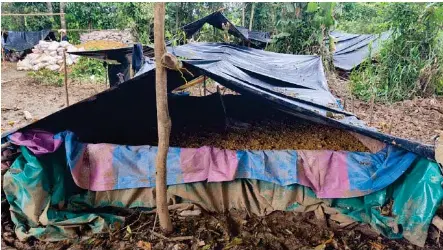
What surprised them was the scarcity of spaces for dialogue about Crucitas. I explained that positions have largely become polarized and confrontational, with little room for finding common ground. Added to this are proposals that prioritize economic benefits over the recovery of an environment that has been degraded for decades—first by opportunistic small-scale miners, and more recently by organized crime.
They also asked about environmental and social standards for the mining industry. I explained that such standards do exist and can be adapted to the country’s context. However, defining, evaluating, and overseeing them requires technical and institutional capacity, as well as independence. There are no simple solutions, but there are more rigorous ways of doing things, including support from specialized international organizations that can bring experience and credibility to the process.
Fifteen minutes later, with sunlight still in my eyes, I realized how short fifteen minutes really are. The interview had ended, yet it felt as though it had barely begun.
I kept thinking about everything I had left unsaid.
One fundamental point remained unmentioned: today, we still do not truly know the extent of the environmental damage in Crucitas. There is no comprehensive study that determines the risks posed by mercury, cyanide, and other toxic metals in the environment or to human health.
Without a clearly identified responsible party, legislation indicates that the State must assume the cost of such a study.
And that missing study is the starting point for everything else. Without it, informed decision-making becomes impossible. It is difficult to design solutions or assign responsibilities. It also hinders the possibility of attracting formal mining operators to a site where the scale of the problem remains unknown.
Some argue that a mining company could help remediate the damage by reprocessing the material still present in the soil. That may be possible. But a critical question arises:
What happens if the affected area exceeds the limits of the concession?
In that case, the damage would extend beyond the company’s ability to address it.
In practice, we are trying to solve something we have not yet fully understood. And that has consequences: it opens the door to partial decisions, incomplete solutions, and conflicts that will inevitably resurface.
Gold prices, currently at historic highs, may encourage decisions driven by the expectation of profits: generating income while, at the same time, addressing environmental damage. Yet this very situation could also represent an opportunity—if environmental recovery is prioritized and if operators with proven track records, robust standards, and strong technical capacity are brought in to work under demanding conditions.
And so I return, almost unintentionally, to the beginning of that interview in the sunlight.
Why has the debate in Costa Rica been framed, in most cases, as a simple question of whether one is for or against mining?
That is probably not the right question.
Perhaps a different—and more uncomfortable—question is needed:
Are we, as a country, willing to understand the problem we claim we want to solve?
That conversation requires clear and shared information, technical criteria from the outset, and spaces where both experts and local communities can be heard. It also requires defining clear conditions before discussing solutions and establishing priorities based on the environmental reality that already exists.
It requires methodology, transparency, and agreements that can endure beyond fluctuations in gold prices.
That is where the pending conversation about Crucitas should begin.