
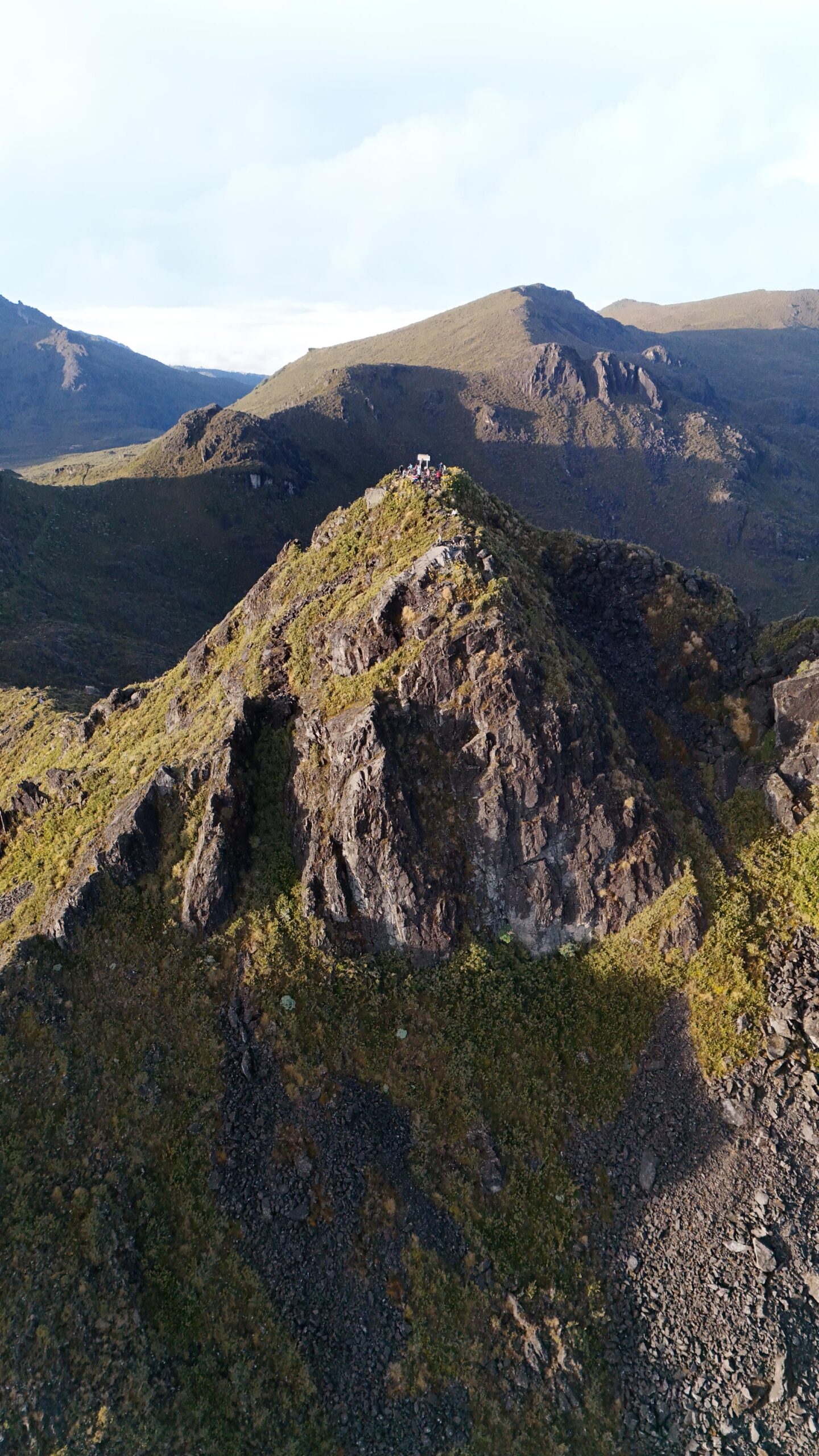
In my long list of places to visit, there was one I had been waiting for the most: the highest gem of Costa Rica—Cerro Chirripó. For a few hours, that place offered me the company of insects, birds, a few mice, one or two mysterious pairs of eyes, and countless thoughts.
In a life of constant “rush”—school, work, home, meals, screens, routines, ups and downs—we often overlook moments of silence and peace. Walking alone toward the shelter, I had the opportunity to reconnect with silence and truly listen to my own thoughts. At that moment, there were no routines or obligations to attend to: just walking and enjoying the moment, the place.
At times, I even felt that I had forgotten how to “disconnect” to feel a greater connection, in a place where we seem so tiny amid the mountain’s vastness. And yet, silence is always there, waiting for us, patiently.
It was then that I realized how much I had underestimated the power of silence. How challenging it can be to have a conversation with oneself, to question whether we are truly present, or if the present is passing by us. And at the same time, I reflected on how much we take for granted these places that invite us to truly live.
We often assume that the vast green landscapes and pure water sources of Chirripó will always be there, waiting for us and serving us. But reality can be very different.
There was a time when water was thought to be an endless resource, and today that idea sounds like a fantasy. A few years ago, imagining machinery destroying protected areas while authorities turned a blind eye seemed distant from our national reality. Today, it is our daily life.
Figures in power that ignore atrocious acts against our flora and fauna, “developments” that surpass any ethical environmental limit, measures that aim to silence land defenders by force—these are all clear signs of the direction we are heading, or being led toward.
Against that noise, the mountain’s silence takes on another meaning. It is not emptiness, but is full of life, balance, and awareness.
Every step of the ascent was also a silent conversation with nature, which does not demand, interrupt, or rush—it simply exists. And in that existence, it teaches us to slow down, to observe, and to listen without immediately responding.
The importance of these places is not just in their existence as natural refuges, but also in their role as mirrors. They show us how small we are, and at the same time, how responsible we should be.
The silence of the mountain exists thanks to fragile ecosystems that regulate the water we drink, the air we breathe, and the climate that sustains us. Protecting them is not a romantic or optional act—it is a form of gratitude and coherence.
Valuing these spaces means much more than visiting them. It means respecting, defending, and learning from them. It means understanding that the silence they share is not just a gift, but an invitation to live more consciously, more slowly, and aligned with what is essential.
Not everyone can—or wants to—climb Chirripó, but we can all do something to ensure that this silence continues to exist. We can all care, question our habits, and reconnect, even for a moment, with the nature that sustains us.
Because in a world that never stops, silence becomes an act of resistance.