
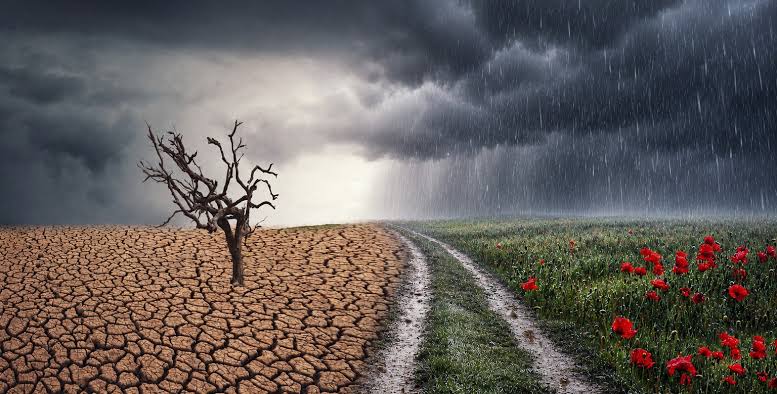
The phrases that I have heard the most recently in short conversations with neighbors and acquaintances have been: “what a downpour!”, “how it has rained these days” or “it has not stopped raining”. What we used to expect as the rainy months in the Caribbean, seems to have extended to the rest of the year. Leaving the house without an umbrella or umbrella has become a risky idea and for many of us, it has become the new normal.
A few weeks ago I was in Guanacaste for a few days and I found the other side of the coin. The daily conversations sounded more like: “I hope it rains a little” and “today there is no water because of the cuts due to the drought.” The contrast could not be more evident.
Costa Rica is a small country in territory. In a few hours it is possible to go from coast to coast and pass through several ecosystems. However, that geographical proximity does not prevent the climate from changing drastically. While some regions face relentless rains, floods and landslides, others struggle with water scarcity, the impact of drought and persistent heat.
It is surprising and alarming how the same climate phenomenon can manifest itself with so much contrast within such a small territory. The most worrying thing is that these differences are no longer something that is observed only in the news and reports. They are felt on a daily basis.
In some regions, families live with the constant worry that their house will flood, that they will be cut off due to obstructions on the road and even that their relatives will not be able to return to their homes. Meanwhile, in others, people wake up not knowing if they will have water to cook, bathe or work during the day. Ecosystems are not exempt from this reality either. Rivers change their flow drastically, wetlands face alterations in their natural cycles and fauna must adapt to increasingly extreme conditions.
We tend to talk about rain and drought as if they were inevitable forces of nature. The truth is that many of their impacts are aggravated by our own decisions: deforestation, disorderly urban development, the occupation of vulnerable areas, the unregulated use of resources and the contamination of water sources, increase the fragility of our communities in the face of any extreme weather event.
Nor can we ignore the responsibility of those who have the obligation to plan and act. For years, studies, strategies, and plans have been announced to strengthen water resource management, protect sensitive ecosystems, and prepare communities to face increasingly severe weather events. However, many of these actions are progressing slowly or are caught between procedures, changes in administration, and lack of resources. Meanwhile, the problems continue to grow.
But the responsibility does not lie solely with the institutions. As citizens, we have also normalized behaviors that contradict the environmental discourse of a “green” country that we like to promote so much. We are alarmed by floods, but we continue to throw waste into rivers. We are concerned about water scarcity, but we continue to use artificial intelligence systems cooled by absurd amounts of water without control. We defend forests on social networks, but only through the screen while we play “Share”.
These contradictions reflect a deeper reality: the problem is not only in our individual habits, but also in the logics of production and consumption that we have normalized.
Change doesn’t just mean turning off the tap while brushing our teeth or separating waste at home, although those actions are still important. It also means questioning the production and consumption models that we encourage with our daily decisions. Every purchase, every service we choose, and every company we support sends a signal about the kind of economy we want to build. An economy capable of generating well-being without compromising the ecosystems on which it depends, that values the efficient use of resources, protects water sources, and recognizes that growth cannot be sustained indefinitely at the expense of natural capital.
Perhaps the El Niño phenomenon is nothing more than an uncomfortable mirror. A phenomenon that highlights our strengths, but also our contradictions. It reminds us that ecosystems and communities are deeply connected and that the problems of one region end up affecting the entire country.
We may not be able to control rainfall or stop droughts. But we can decide how we consume, what organizations we support, how we use available resources, and what we demand of decision-makers in the public and private sectors. We can also promote more sustainable economic models, capable of generating prosperity without passing on environmental costs to future generations.
In the end, regardless of whether one region lives in the rain and another in drought, the question is not how hard the El Niño phenomenon is hitting. The question is how much we are willing to change to build more resilient communities, economies, and ecosystems.